Losing a tooth is weird. One day everything is fine, and the next you've got this gap that feels huge with your tongue every time you swallow. Whether it happened from a bad crack, an extraction you put off for too long, or a sports accident years ago, dealing with it is a pain.
Patients walk into Worcester Smile Studio every single week staring at that empty space, totally overwhelmed by the choices. You search online, and you're immediately buried under a mountain of medical jargon, osseointegration, pontics, abutments, bone resorption, it's exhausting.
Mostly, people just want to know two things: Which one looks and feels the most normal? And am I wasting my money?
Usually, the conversation boils down to two main contenders: a traditional dental bridge or a dental implant. They both get the job done, but they do it in completely opposite ways. Let’s strip away the textbook fluff and look at how they actually stack up in real life.
The Bridge Approach: Fast and Familiar
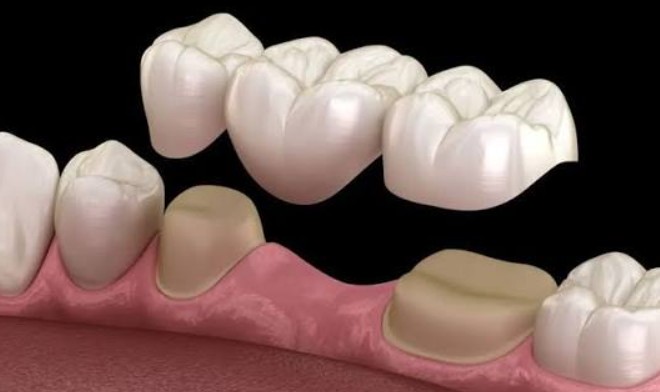
Think of a bridge like a custom made span. You’ve got a fake tooth hanging in the middle, held up by crowns placed over the natural teeth right next to the gap.
If those neighboring teeth already have large fillings, old crowns, or some wear and tear, a bridge can actually be a smart move. It kills two birds with one stone by placing new protective crowns on those weak teeth while filling the missing space at the same time.
The Catch with Bridges
Here is the part dentists don't always emphasize enough: to put a bridge in, we have to shave down your healthy, natural teeth on either side.
If the teeth flanking the gap are totally untouched, perfectly healthy, and cavity free, grinding them down to tiny pegs just to support a fake tooth feels brutal. Some patients hate the idea of messing with healthy teeth.
On the plus side, bridges are fast. You come in, we prep the teeth, take an impression, and a couple of weeks later you walk out with a solid, complete bite. No surgery, no months of healing, no waiting around.
The Implant Approach: The Long Game
Dental implants involve a more comprehensive process designed to replace both the missing tooth and its root. Instead of leaning on your other teeth, an implant replaces the root itself.
We place a tiny titanium post straight into your jawbone where the missing root used to be. Over the next few months, your bone actually grows around that metal post, fusing with it until it's as rock solid as a natural root. Once that's locked in, a custom crown gets screwed or cemented on top.
Because it stands entirely on its own, your neighboring teeth don't get touched at all. They stay natural and intact.
The Catch with Implants
It takes patience. We are talking months, not weeks. Between the initial placement, the healing phase, and the final crown, you’re looking at a journey. If you need a bone graft first because your jaw has thinned out over time, add even more time to the clock.
And then there's the wallet factor. Implants cost more upfront. There's surgery involved, specialized components, and precise lab work. Insurance coverage varies and may not cover implants as generously as other tooth replacement options.
How They Actually Compare Day to Day
When patients sit in our chair trying to make the final call, we usually break it down into four straightforward categories:
What Happens Underneath the Gum?
When you lose a tooth, the jawbone underneath stops getting stimulated by chewing pressure. Over time, that bone can start to shrink back, which is why people who've had missing teeth for years sometimes look a bit sunken in around the mouth.
An implant can help preserve the bone around the implant site because the implant transfers chewing forces to the jawbone. A bridge sits on top of the gums, so the bone underneath the missing tooth can continue to resorb over time.
Cleaning and Maintenance
Bridges: Because all three units, the crowns and the fake tooth, are fused together as one piece, you can't floss straight down between them. You have to thread floss underneath using a little plastic needle called a floss threader. It’s not hard once you get the hang of it, but it's definitely an extra chore.
Implants: You brush and floss them as directed, similar to natural teeth. Because they stand alone, floss can usually pass between the implant crown and neighboring teeth.
Longevity
A well made bridge can provide many years of service, though it may eventually need replacement as gums shift or wear occurs.
An implant can also last for many years with proper care and maintenance. However, no dental restoration is guaranteed to last a lifetime.
When It’s Time to Choose Better Dental Care
So, which one wins? Honestly, there's no universal right answer. It depends entirely on your situation.
Go with a bridge if:
- You want the gap fixed quickly for an upcoming event or just want to get it over with.
- You want to avoid any kind of surgical procedure.
- The teeth next to the gap already need crowns anyway, so preparing them can solve multiple problems.
Go with an implant if:
- You have healthy adjacent teeth and want to avoid altering them.
- You want a standalone tooth replacement option.
- You're willing to trade a longer healing timeline for a potentially long lasting result.
At Worcester Smile Studio, we don't push one over the other until we've actually looked at your mouth. We'll check your bite, evaluate your bone and gum health, talk about your budget, and give you an honest recommendation without the sales pitch.
If you're tired of guessing and want a clear look at what makes sense for your smile, come see us. Drop by or give Worcester Smile Studio a call to set up a consultation. We'll look at the gap, answer your questions straight, and help you get your full, confident smile back.
Frequently Asked Questions
Q: Will getting an implant hurt?
A: During the actual surgery, you're numbed with local anesthesia, so you shouldn't feel sharp pain. Most patients experience some pressure and vibration during the procedure, followed by a few days of soreness that can often be managed with recommended pain relief options.
Q: How long does a bridge take from start to finish?
A: The process often involves two or more appointments and may take a few weeks, depending on the case, laboratory work, and whether temporary restorations are needed.
Q: Can anyone get an implant, or are there dealbreakers?
A: Many healthy adults can be candidates for dental implants. However, heavy smoking, certain uncontrolled medical conditions, or insufficient jawbone may affect healing or require additional treatment. A dental evaluation is needed to determine candidacy.
Q: Do people notice a fake tooth?
A: Both bridges and implant crowns can be color matched to your surrounding teeth. Modern dental restorations are designed to blend naturally with your smile, although the final appearance depends on the materials, placement, and individual case.