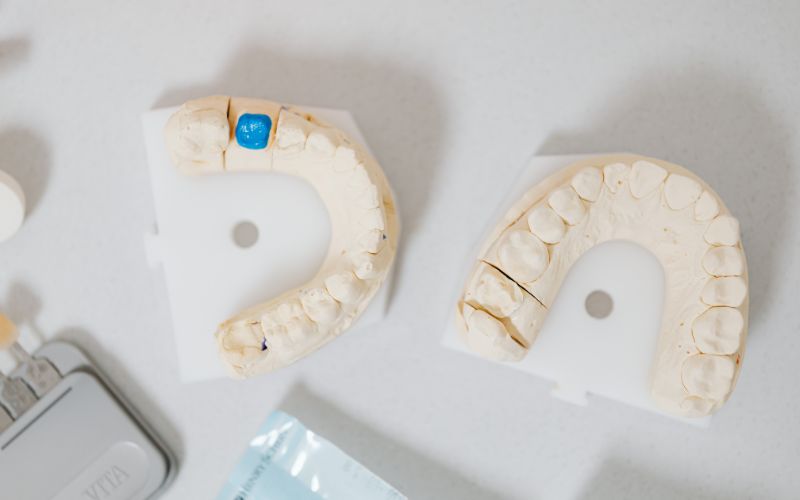
It is always a jarring moment when you are in the middle of a meal or brushing your teeth and suddenly feel something hard and loose rolling around in your mouth. Realizing a dental filling has popped out is a common mishap, but it can easily trigger a wave of anxiety. You might wonder if you are facing a major dental emergency, how to protect the open gap, and what exactly you should do next.
At Worcester Smile Studio, we frequently help patients who have lost a filling and are unsure whether they need urgent treatment or how to protect the tooth until their appointment.
While a lost filling definitely requires a prompt visit to the dentist, taking a deep breath and knowing how to handle it at home can make a massive difference in your comfort. Here is a practical, down-to-earth guide on what to do when a filling falls out.
Get the Filling Out of Your Mouth Right Away
The very first step is to locate the loose piece of filling and spit it out. You want to make sure you do not accidentally swallow it or breathe it into your lungs.
Once it is out, take a quick look at it. An older silver amalgam filling usually looks like a tiny chunk of dark gray metal. A modern composite filling will look like a small, tooth-colored piece of hard plastic or porcelain. If possible, save the broken piece and bring it to your appointment. Being able to show it to your dental team can help them understand how the old restoration gave way.
Call Your Dentist to Book an Appointment
A lost filling is not something that will get better on its own. When a filling comes loose, it leaves the inner layers of your tooth completely open to saliva, food particles, and bacteria. Without that seal, the tooth is highly vulnerable to rapid decay and structural cracks.
Call your dental office as soon as you realize the filling is gone. Let the patient coordinator know exactly what you are feeling, whether it is a sharp pain, a dull ache, sensitivity to temperature, or just a sharp edge that is scraping against your tongue. They will determine how quickly you should be seen based on your symptoms and help arrange the appropriate appointment.
Keep the Cavity Completely Clean
Because the inner structure of your tooth is now a miniature open pocket, food particles can get trapped inside very easily. This buildup can harbor plaque bacteria and trigger a sudden spike in pain or irritation.
After you eat anything, make it a habit to rinse your mouth gently with warm salt water. Mixing half a teaspoon of salt into a glass of warm water creates a simple, soothing rinse that clears out food debris without irritating the open tooth. When you brush, be incredibly gentle around the empty space, using a soft toothbrush so you do not upset any exposed nerves.
Manage Pain and Sensitivity Safely
When a filling drops out, it often leaves the dentin layer exposed. Dentin sits right beneath your outer enamel and contains thousands of microscopic pathways leading straight to the tooth nerve. Because of this, feeling a sudden jolt of sensitivity from cold air or warm drinks is completely normal.
To stay comfortable while you wait for your appointment, try these simple strategies:
Stick to Room Temperature
Avoid piping hot coffee, iced drinks, or frozen treats. Stick to mild, neutral-temperature foods.
Chew on the Safe Side
Train yourself to do all your chewing on the opposite side of your mouth to keep food from pressing into the open cavity.
Use Standard Relief
If the tooth is constantly aching, over-the-counter pain relievers can help take the edge off. Be sure to use them exactly as directed on the bottle.
Try Dental Wax for Sharp Edges
If the remaining edges of your tooth are sharp and cutting into your cheek, look for temporary dental wax at a local pharmacy. Pinching a tiny bit of wax over the sharp spot can shield your tongue until your dentist can smooth it out permanently.
Why Do Dental Fillings Fall Out in the First Place?
It is completely natural to wonder why a filling failed, especially if you take great care of your teeth. Even though dental restorations are incredibly strong, they are not permanently indestructible. A few common culprits include:
New Cavities Around the Edges
Over time, microscopic gaps can form between the dental filling and your enamel. Plaque can seep into these tiny spaces, creating a new cavity right underneath the old work. As the supporting tooth softens, the filling loses its grip and pops free.
Everyday Wear and Tear
The constant pressure of biting down and chewing exerts massive stress on your teeth every single day. Over several years, the bonding material holding the filling in place can naturally weaken and break down.
Teeth Grinding (Bruxism)
If you clench your jaw or grind your teeth while you sleep, you are subjecting your fillings to intense, repetitive force. This heavy pressure can cause the filling material to crack or loosen over time.
Crunching on Hard Objects
Biting down on something unforgiving, like an unpopped popcorn kernel, ice cubes, or hard candy, can instantly break a filling loose or crack the natural tooth around it.
What to Expect at Your Appointment
When you get to the dental office, your team will look closely at the tooth to see why the filling came out and find the best way to fix it safely.
They will likely start by taking a quick digital X-ray. This image lets them check deep inside the root area to make sure there is no hidden decay or nerve damage under the surface.
If the rest of your tooth is still strong and healthy, the fix is usually very simple: they will clean out the space and place a fresh composite filling. However, if a large chunk of the natural tooth broke away when the filling fell out, a simple patch job might not hold up. In those situations, your dentist might recommend a custom inlay, an onlay, or a full protective dental crown to wrap around the tooth and restore its natural chewing strength.
Frequently Asked Questions
Q: Is a lost filling considered a critical dental emergency?
A: While it needs prompt care to stop decay and protect the nerve, it is generally treated as an urgent matter rather than a critical emergency, as long as you are not dealing with unmanageable pain or major facial swelling.
Q: Can I use superglue to temporarily put my filling back in?
A: No, you should never use household glues or industrial adhesives in your mouth. These products contain harsh chemicals that can damage your tooth and irritate sensitive oral tissues.
Q: What happens if I accidentally swallow the filling?
A: If you swallow a small filling, it will typically pass through your digestive system naturally without causing any harm. The main risk is accidentally breathing it into your lungs, which is why it is so important to spit it out if you catch it early.
Q: How many days can I wait to see a dentist after a filling falls out?
A: It is ideal to see a professional within 24 to 48 hours. Leaving the inner layers of the tooth unprotected for weeks or months can lead to deep bacterial infections, severe decay, or the need for more extensive treatment.
Q: Can an open tooth get infected quickly?
A: The inner layers are highly vulnerable to bacteria once the protective seal is gone. While a deep infection usually takes some time to develop, getting the tooth cleaned and sealed quickly is the best way to prevent complications.
Q: Will I automatically need a root canal if my filling fell out?
A: Not necessarily. If the new decay is shallow and the inner nerve is completely uninjured, a simple replacement filling or a crown may be all that is needed. A root canal is usually only required if decay or infection has reached the deep pulp chamber.